

1910
FOR SALE, By Private Bargain,
Steam Drifter WHITE CROSS KY 571. Built at Anstruther …. after Lloyds’ Special Survey. Length 90 feet: Beam 19 ft. 2ins, Depth 9 ft. 7 ins. Compound surface condensing Engine. Cylinders14x 29 x20 stroke.
New Boiler and Casing 1907.
This vessel is in very good order, and is presently lying in Alloa. Private Offers to be lodged with W. S. BONTHRON. Anstruther, on or before 14th Jan., 1911.
THE BOAT, HENRY REID, KY. 657, for Sale. Apply D. BOYTER or THOMAS REID, Shore Street, Cellardyke.
One hundred and fifty fishermen are at present attending the Fife Committee’s navigation classes at Anstruther Cellardyke, and St Monans. The teachers are supplied by the Dundee Technical Institute.
A distressing case of suicide was brought to light on Tuesday morning at West Forth Street, Cellardyke, when James Watson (51), fisherman, was found dead in a loft or garret, hanging from one of the rafters. It seems that Watson’s nonappearance at breakfast roused alarm in his household, and a search was made for him. It was noticed that the key of the loft was missing, and his son-in-law entering it found the unfortunate man’s suspended from the rafters. Medical aid was called, but life had been extinct for several hours.
1911
Sale of Steam Drifter
The steam drifter Scot, WK. 608, belonging to Messrs George and David Cormack, has just been sold to Henry Bett, fisherman. Cellardyke. Fifeshire. The Scot was built for the Messrs Cormack by the Smith Dock Cov., North Shields, in 1893. The new owner, Mr Bett, already owns the K.Y. steamer Breadwinner. The Scot was taken to Anstruther on Wednesday. ( incorrect build date it was 1903)
PARISH COUNCIL.—Rev. Mr Ray and Messrs Leslie and Barbour were the members present at a meeting of the Parish Council held last Friday. On the motion of Mr Barbour, seconded by Mr Leslie, Mr Ray was appointed Chairman for the ensuing year. Mr Ray thanked the members for his re-appointment, and said he would, as before, do what he could for the interest of the town. The various committees were then appointed. Reporting on the conference held with East Anstruther Parish Council, the Chairman stated that they had a very pleasant talk with the Anstruther members on the subject of a joint purchase for vagrants, and, as was already known, it was unanimously agreed that each Council should provide a room in their own Parish, the room in Anstruther to serve males, and the room in Cellardyke for females, the expense to be borne equally by the two Councils. West Anstruther had been asked to join in the scheme, but he understood that they had refused to do so. The next thing for the Council to do was to consider the question of renting a house suitable for their purpose. Mr Ray mentioned two properties, one James Street and one in West Forth Street, either of which might be adapted to suit the Council’s requirements. On the suggestion of Mr Barbour, it was agreed to leave the matter in the hands of a committee, with full powers to obtain a lease of the property thought most suitable. It was agreed to make the usual distribution of coal to the poor.
1912
At a meeting Cellardyke Fishermen’s Benefit Society the following were elected Directors Messrs Robert Murray, James Martin. Leslie Henderson, William Sutherland, Thomas Murray. John Carstairs, and John Murray. The treasurer reported that the funds on hand amounted to £1426, while the membership stood at 118.
Fife Fishermen and Herring Trawling.—Mr Bertram Dunbar, Secretary of the East Coast Fisheries Association, addressed a large meeting of Cellardyke fishermen on the question of trawling for herring. He pointed out that after pegging away at the Government, the Association had at last got a Departmental Committee to inquire into the latest development of the destructive trawl. Trawling for herring was a monstrous evil which was threatening the herring fishing with absolute ruin. Not only were large quantities of immature herring destroyed by the trawl, but this murderous form of fishing also destroyed the herring spawning grounds, and did incalculable injury to the herring. The only remedy was total prohibition, and this could only be done satisfactorily by international agreement. The Government should be pressed to call an urgent conference of the Powers, arid by unanimous agreement take immediate steps to stop the barbarous trawling for herring. Mr Martin Gardner, Cellardyke, suggested to ask every skipper to hand in the names of his crew for membership of the Association, and this suggestion was unanimously agreed to.
PRESENTATION TO CELLARDYKE FISHERMAN.
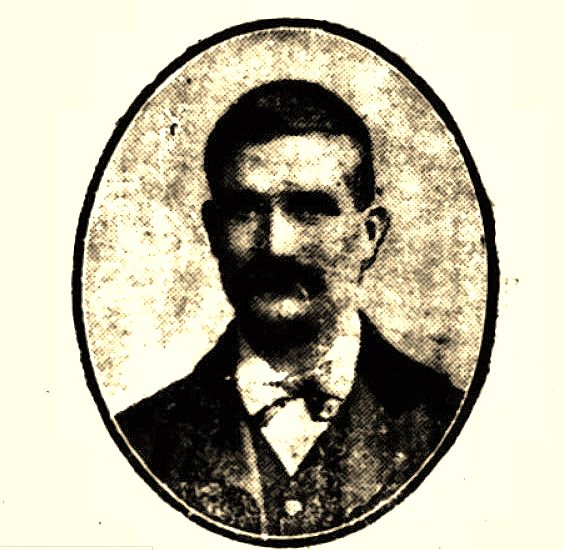
On Friday afternoon Robert McRuvie was presented with the Royal Humane Society’s Parchment in recognition of him bravery in saving life of a little boy, Alexander Pattie, on first August last.
Provost Black presided over a well-attended meeting held in the Council Chamber. Bailies Butters and Marr, Rev James Ray, Rev. A N Scott, Mr C. H. Maxwell and others were present.
The Provost said he was very pleased to see a good turn out to do honour to one of their fellow townsmen. He was sure he spoke the minds of all when he said they were very prowd of Mr McRuvie. (Applause) It was often asserted that the spirit of bravery and of daring was passing away, that the present generations was not so brave as former generations. He had had on occasions before to present similar diplomas to different men, and he for one believed that the present generation was as reedy to do brave deeds as any previous generation. He believed Mr McRuvie was a descendant of old Malcolm McRuvie who fought in the battle of Trafalgar, and they found that he had been as ready to risk his life as was his forefather. (Applause.) The Provost then recalled the facts of the rescue effect, by Mr McRuvie, how he jumped into the water with his heavy sea boots on and pulled out the little boy. There was 12 feet of water at the time, and but for Mr McRuvie’s prompt action there was no doubt but that the lad would have been drowned. The Provost then read the Parchment, and in handing it over said that should the occasion again arise, Mr McRuvie would be found ready. (Applause.)
Mr McRuvie said he was not accustomed to public speaking, but be wished to thank the Sergeant of Police for forwarding the report to the proper authorities. (Applause.)
Rev. Mr Ray, in response to an invitation by the Provost, said he was very pleased to be present and to know that another Cellardyke man had proved himself a brave man. He desired to associate himself with all that the Provost had said. Mr McRuvie had done honour to himself and honour to Cellardyke, and as Minister of Cellardyke he felt that some of the honour had fallen upon him. He therefore congratulated Mr McRuvie on having saved a child’s life. He thought it very desirable that every fisherman should be able to swim. Some time ago there was a little talk about the institution of a swimming bath, but as he was not a member of the School Board he did not know whether anything had been done. He thought it would be an excellent thing to have a swimming pond if it were at all practicable, it would be a very good thing for children to learn the art of swimming. He had no doubt that many valuable lives would have been saved in the past had swimming been taught to fishermen. He again congratulated Mr McRuvie and hoped they would always find men in Cellardyke ready to risk their lives to save the lives of others. (Applause.)
The Provost also agreed with Mr Ray that every fisherman should learn to swim. He considered that the provision of a bathing pond could be easily carried out. He then called upon Mr Noble Scott.
Rev. Mr Noble Scott said he thought It was an occasion for shouting rather than for speaking. Such an occasion as this kindled enthusiasm and gladdened the heart. He congratulated Mr McRuvie but was sure that had he been accustomed to public speaking, he would have be to the first to say that many another man in Cellardyke would have done the same. (Applause.) He considered that any lad could learn to swim very easily. They had the whole sea at their doors and the art could be so easily acquired. He know of no better exercise and pleasure than swimming, and was proud to say he was once able to save the life of the man who had taught him to swim. As he had said, he thought the occasion more fitting for a shout than for a speech, and if the Provost called for three cheers he would join in heartily. (Applause.)
On the call of the Provost, three very hearty cheers were given for Mr McRuvie, and a similar compliment was paid to the Provost for presiding.
1913
The Merchants of Cellardyke will observe THURSDAY and FRIDAY 1st and 2nd January, as New Year’s Holidays.
To he sold by public roup at the Middle Pier Anstruther, on Saturday first, 20th December, the following fishing gear belonging to the late Mr THOMAS TARVIT. Cellardyke:—10 White Nets, 5 Lines, and 1 Bait Net. Sale to commence at 2 o’clock afternoon. W. S. BONTHRON, Auctioneer.
1914
MR DAVID PRATT, son of Mr Alex. Pratt, Ellice Street, has just received his commission as Second Lieutenant in the H.L.I., and proceeds south this week. Mr Pratt has been a couple of years attached to the O.T.C. of St. Andreas University.
Grocer Fined
With his face terribly bruised, and so frail that he had to be assisted to stand from the dock when he appeared before Sherriff Armour-Hannay is Cupar Sheriff Court, on Tuesday. Walter Myles grocer, 26 John Street, Cellardyke, did not appear capable of doing any one much injury; the charge him was that on the 19th December he assaulted Isabella Foster, outworker, residing at 26 John Street, by striking her several blows on the head, face, and body with a hearth brush, to the effusion of blood, and further, that he committed a breach of the peace. Accused tendered a plea of guilty, and Sheriff Armour Hannay assessed the penalty at £2 or 20 days. The fine was paid.
NIGHT FISHING AT YARMOUTH. CELLARDYKE AND NORTH FISHER- MEN AT LAW.
In Peterhead Sheriff Court, on Friday, before Sheriff Laing, proof was heard in an action at the instance of James Muir (Keay), Fowler Street, Cellardyke, registered owner of the steam herring drifter Innergellie, KY 604; John Muir, Shore Street; George Keay (Reid), Shore Street ; David Corstorphine, Dove Street ; George Smith, Fowler Street; and William Mair, James Street ; all of Cellardyke ; and Alexander Reekie, fisherman, St Monans ; against Andrew Whyte, Alexander Stephen Whyte, Andrew Whyte, jun., and Robert Whyte, all of 17 Fredrick Street, Inverallochy, registered owners of the steam herring drifter Resolute, FR 556, for the recovery of £24 2s 1d, being the damage done to the pursuer’s boat at Yarmouth on October 15, 1913, through the alleged negligence and recklessness of those on board the defenders’ vessel. The defenders admitted liability for the damage to the boat, but objected to pay the pursuers the sum of £8 1s 6d, being the estimated loss arising through the detention of the pursuers’ boat in the harbour through the collision.
The Pursuers’ Evidence.
James Muir (Keay), skipper of the Innergellie, said he was the sole owner of that boat. He had been engaged in the English fishing of 1913. He had gone to that fishing for over forty years. On the morning of October 15, they arrived at Yarmouth harbour with a shot of 51 crans. When they were berthed, the defenders’ vessel Resolute ran into them shortly after 7 o’clock a.m. He sent for Alexander Farquharson, insurance surveyor, and he, along with another surveyor, came made a survey of the damage. It was then arranged that the drifter should be temporarily repaired, and he got carpenters for this purpose and the boat was docked. When the carpenters came on board he asked them when they would be finished, but they could not give an answer. They finished about 6.30 p.m., and when they left the crew had to clear away all the rubbish both on the deck and in the hold. The damage affected the fish hold. If they had been wanting to get to sea that night, it would have been between 9 and 10 o’clock before they could have left. It was a dull, cloudy night, but the moon was full. He never shot his nets after dark at Yarmouth, because he ran a risk of damaging another boat’s nets and losing his own. There was a record fleet down at Yarmouth that year. There was little chance of getting a berth going out in the middle of the night, and they went out at 6 o’clock next morning, and found that the boats were hauling their nets with plenty of herrings.
Cross-examined by Mr Masson, pursuer said the night in question was not a clear night. The cost of the temporary repairs was £3 15s. He never went to sea after 4 p.m. but he might have gone if he had been clear at that hour.
Alexander Farquharson, marine surveyor. Aberdeen, who is in the employment of the United Scottish Herring Drifter Insurance Company, said he had surveyed the damage and had ordered the temporary repairs. The fishermen could not have “redd” their nets while the repairs were going on, but they could have had steam up. Pursuers used all expedition to get the repairs executed.
In cross-examination, he said it was the case that Scottish boats went to see after midnight on Sunday.
George Keay (Reid), one of the pursuers, said they got Mr Farquharson, surveyor, and Mr Grier, another surveyor, to survey the damage done, and the Innergellie was docked and the repairs commenced that forenoon. After they had finished at 6.30 p.m., the crew had everything to put in order. It was their custom never to go to sea while it was dark at Yarmouth, as it was almost impossible to get a berth at daylight.
William S. Bonthron, Anstruther, fishsalesmen to pursuer, said the custom for the boats he had charge of at Yarmouth was not to proceed to sea in the dark. The fishing at Yarmouth was very congested, and if a boat went out in the dark it would have difficulty in securing a berth and ran the risk of losing its own nets and destroying others. If a boat was prevented from going to sea from 6.30 to 10 o’clock, it lost the daylight fishing, and had a chance of losing the night fishing. John Muir, one of the pursuers, and son of the first witness, also gave evidence of a corroborative nature. Thomas Milne, skipper of the Peterhead drifter Caledonia, and James Strachan, skipper of the Peterhead drifter E. J. M., said it was not the usual custom from their experience for Scottish boats to go to sea after dark, although some of them did risk it. William Strachan, skipper of the Peterhead drifter W. J. R., having given evidence, the defence was then submitted.
The Defenders’ Case.
Andrew Whyte, one of the defenders, and skipper of the Resolute, said he was in charge of the Resolute during the English fishing season of 1913, and he was on board when the Resolute collided with the Innergellie. They went to sea that day about 12 o’clock, and came in next morning with a shot of fish. There were no particular hours for going to sea at Yarmouth, They went out at all hours of the day and night. Assuming that the Innergellie was ready for sea between 6 and 8 o’clock p.m., there was nothing to prevent her going to sea that night. There was no risk that he knew’ of. He was not sure if Scottish’ boats went to sea on Sunday night, but they went early on Monday morning, sometimes shortly after midnight. The reason was because Scottish people always kept the Sabbath day. He saw the Innergellie immediately after the damage. The gun-wale was broken in, and on the other side some planking was damaged, but the planking of the ship itself was not damaged. In his opinion, if it had been his vessel, he would have been ready for sea in a few hours. He would have made ready his nets, and cleared away the shavings as he went to sea. There was no excuse for remaining in the harbour. His experience was that there was as much congestion at Yarmouth fishing grounds during the day as at night.
Cross-examined by Mr Troup, witness said it was nearly as dangerous shooting nets in daylight as in dark.
James Burnett, Fraserburgh, skipper of the steam drifter Clara Buchan, of Fraserburgh, said he frequently went out on Monday morning after midnight, and returned the same day with fish. If the weather was favourable, and everything clear, boats often left for the fishing grounds in the evening. They could shoot their nets in the dark.
John Cow, 11 Maiden Street, Peterhead, said there was no difficulty for a boat leaving Yarmouth about 7 or 8 o’clock to go to the fishing assuming that the sky was clear. If a vessel went to sea at that hour she could shoot her nets that night. There might be a difficulty about getting a berth, but one could be got according to the manner the tide affected the rest of the fleet.
John Masson, 16 Commerce Street. Fraserburgh, gave corroborative evidence, and John Hugh Cow, Peterhead, was held as concurring with John Cow. The case was adjourned until the evidence of Captain John George Bammant, Harbourmaster, Yarmouth, for the defenders, and Captain John H. Smith, fish wharf-master, Yarmouth, for the pursuers, could be taken on commission at Yarmouth. The agents were:—For the Pursuers. Mr D. Troup, Peterhead: for the Defenders, Mr C. G. Masson. Peterhead.